Accessing a comprehensive world history PDF offers convenient, free learning, but requires caution when selecting download sources due to potential online risks.
Desktop software provides alternative, safe methods for acquiring legally available ebooks, expanding historical knowledge access for users globally.
Why a Comprehensive World History PDF is Valuable
A well-structured world history PDF serves as an invaluable resource for students, researchers, and anyone with a thirst for understanding the human story. It consolidates vast amounts of information – from ancient civilizations to contemporary global events – into a single, portable document.
The convenience is undeniable; access to such a resource isn’t limited by library hours or physical book availability. Furthermore, digital formats often allow for searchable text, making research significantly more efficient. However, navigating the online landscape requires discernment.
Many websites offer free ebooks, but verifying their legitimacy is crucial to avoid malware or copyright infringement. Utilizing trusted sources and employing safe downloading practices are paramount. A comprehensive PDF empowers self-directed learning and fosters a deeper appreciation for the complexities of our shared past.
The Rise of Digital History Resources
The proliferation of digital history resources, including world history PDFs, reflects a significant shift in how we access and engage with the past. Traditionally confined to libraries and academic institutions, historical knowledge is now increasingly democratized through online platforms.
This rise is fueled by technological advancements and a growing demand for accessible learning materials. Websites offering free ebooks have become commonplace, alongside dedicated digital archives and online courses. However, this accessibility comes with caveats.
Users must exercise caution when downloading from unverified sources, as the risk of encountering malicious software or copyright violations is present. Utilizing reputable platforms and employing safe downloading practices, alongside desktop software, are essential for navigating this evolving landscape.

Ancient Civilizations: Foundations of Our World
Exploring ancient civilizations via world history PDFs reveals the origins of societal structures, innovations, and cultural practices shaping modern human existence.
Mesopotamia: The Cradle of Civilization
Delving into Mesopotamian history through a world history PDF unveils the remarkable advancements of the Sumerians, Akkadians, Babylonians, and Assyrians. This region, nestled between the Tigris and Euphrates rivers, witnessed the birth of agriculture, urbanization, and complex societal structures.
Early Mesopotamians developed cuneiform, one of the earliest writing systems, enabling record-keeping and the codification of laws like Hammurabi’s Code. Their innovations extended to mathematics, astronomy, and irrigation, laying the groundwork for future civilizations. Studying these developments within a PDF format provides accessible, detailed insights into this foundational period.

Accessing this information digitally allows for focused research, enhancing understanding of Mesopotamia’s lasting impact on law, governance, and technological progress, solidifying its title as the ‘cradle of civilization.’
Ancient Egypt: Pharaohs and Pyramids
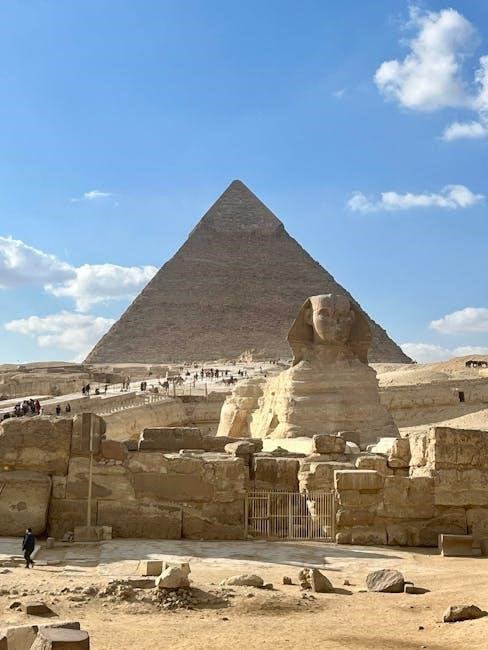
A world history PDF unlocks the mysteries of Ancient Egypt, a civilization defined by its powerful pharaohs and monumental architecture. The Nile River’s predictable flooding enabled agricultural surplus, supporting a complex society with a hierarchical structure and a sophisticated religious system.
The pyramids, colossal tombs for pharaohs, exemplify Egyptian engineering prowess and beliefs about the afterlife. Hieroglyphic writing, intricate art, and advancements in medicine and mathematics flourished alongside these grand projects. A digital PDF allows detailed examination of these achievements.
Exploring Ancient Egypt through accessible digital resources reveals a culture deeply rooted in tradition, innovation, and a profound connection to the natural world, leaving an enduring legacy.
The Indus Valley Civilization: A Forgotten Realm
A comprehensive world history PDF illuminates the Indus Valley Civilization, a Bronze Age society contemporary with Egypt and Mesopotamia, yet remarkably distinct. Flourishing around 3300-1700 BCE, this civilization spanned modern-day Pakistan and northwest India, showcasing advanced urban planning.
Cities like Mohenjo-daro and Harappa featured sophisticated drainage systems, standardized brick construction, and a grid-pattern layout – evidence of a highly organized society. Despite their advancements, the Indus script remains undeciphered, contributing to its “forgotten” status.
Digital resources offer a crucial window into this enigmatic culture, allowing researchers and enthusiasts to explore archaeological findings and speculate on the reasons for its decline, preserving its legacy.
Ancient Greece: Democracy and Philosophy
A detailed world history PDF reveals Ancient Greece as the birthplace of democracy and philosophical thought, profoundly shaping Western civilization. From the city-states like Athens and Sparta emerged innovative political systems, notably Athenian direct democracy, where citizens participated in governance.
Simultaneously, Greek philosophers – Socrates, Plato, and Aristotle – revolutionized intellectual inquiry, exploring ethics, metaphysics, and politics. Their ideas continue to influence modern thought, forming the bedrock of Western philosophical tradition.
Accessing this history digitally allows for in-depth study of Greek contributions, examining their impact on law, art, literature, and the very foundations of rational discourse.
The Roman Empire: Law, Engineering, and Conquest
A comprehensive world history PDF illuminates the Roman Empire’s enduring legacy, built upon masterful engineering, sophisticated law, and extensive military conquest. From its republican origins to its imperial zenith, Rome dominated the Mediterranean world for centuries.
Roman engineering marvels – roads, aqueducts, and public buildings – demonstrate practical innovation and organizational skill. Roman law, codified and refined, provided a framework for legal systems across Europe and beyond.
Through strategic military campaigns, Rome expanded its territory, leaving an indelible mark on language, culture, and governance. Digital access to this history allows detailed examination of Rome’s rise and fall.
The Medieval Period: Transition and Transformation
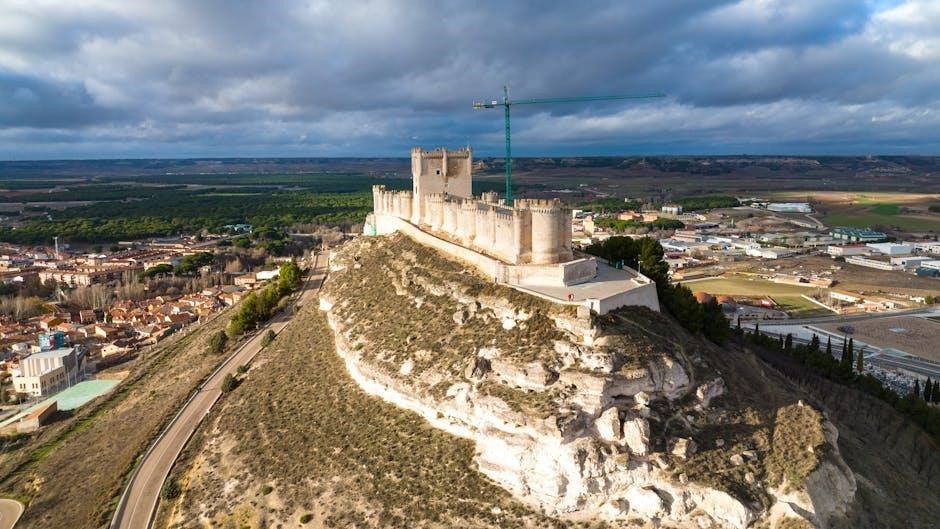
A world history PDF reveals the Medieval Period as a dynamic era of societal shifts, following classical antiquity and preceding modern times.
Exploring this period digitally offers insights into feudalism, religious influence, and the foundations of modern Europe.
The Fall of the Roman Empire and its Aftermath
A detailed world history PDF illuminates the complex factors contributing to the decline and eventual fall of the Western Roman Empire, a pivotal moment in global history. Internal political instability, economic woes, and constant pressure from migrating Germanic tribes all played significant roles.
The aftermath wasn’t a sudden collapse, but a gradual transformation. The empire fragmented into smaller kingdoms, laying the groundwork for medieval Europe. Accessing this information through a PDF allows for focused study of the resulting power vacuums, the rise of new political entities, and the preservation of Roman legal and cultural traditions within the emerging structures.
Furthermore, a digital resource can showcase how the Eastern Roman Empire, or Byzantine Empire, continued to flourish, preserving classical knowledge and influencing future civilizations for centuries.
The Byzantine Empire: A Legacy of Rome
A comprehensive world history PDF expertly details how the Byzantine Empire, the continuation of the Roman Empire in the East, preserved Greco-Roman traditions for over a thousand years. Centered in Constantinople, it became a beacon of culture, law, and Orthodox Christianity.
These digital resources showcase the empire’s sophisticated administrative system, its thriving trade networks connecting East and West, and its remarkable artistic achievements – mosaics, architecture, and literature. Studying the Byzantine Empire via a PDF allows for in-depth exploration of its complex relationship with its neighbors, including the Persians, Arabs, and various Slavic peoples.
The PDF format facilitates focused research on its eventual fall in 1453 and its lasting impact on Eastern Europe and beyond, solidifying its place as a crucial link between antiquity and the modern world.
The Rise of Islam and the Islamic Golden Age
A detailed world history PDF illuminates the rapid expansion of Islam from the 7th century onward, originating in Arabia and swiftly spreading across the Middle East, North Africa, and into parts of Europe and Asia.
These resources highlight the unifying force of the new faith, alongside the political and military factors driving its conquests. Crucially, the PDF format allows for focused study of the subsequent Islamic Golden Age – a period of remarkable intellectual, scientific, and cultural flourishing.
Scholars preserved and translated classical texts, making advancements in mathematics, astronomy, medicine, and philosophy, profoundly influencing global knowledge. Accessing this information through a PDF provides a structured understanding of this pivotal era.
Medieval Europe: Feudalism and the Church
A comprehensive world history PDF details how, following the fall of the Roman Empire, Medieval Europe developed a distinct socio-political system: feudalism. This hierarchical structure, based on land ownership and reciprocal obligations, shaped daily life for centuries.
The Church exerted immense power, not only spiritually but also politically and economically, owning vast lands and influencing rulers. PDFs offer detailed analyses of monastic life, cathedral construction, and the role of the papacy.
These resources illustrate the complex interplay between secular and religious authority, the rise of universities, and the cultural impact of the Crusades, providing a nuanced understanding of this transformative period.
The Mongol Empire: Conquest and Cultural Exchange
World history PDFs illuminate the astonishing rise of the Mongol Empire in the 13th and 14th centuries, detailing its unprecedented expansion across Asia and into Europe. Genghis Khan’s military strategies and the empire’s administrative innovations are thoroughly examined.
However, these resources also highlight that the Mongol impact wasn’t solely destructive; the empire fostered significant cultural exchange along the Silk Road, facilitating trade, technology transfer, and the spread of ideas.
PDFs reveal how Mongol rule connected disparate civilizations, influencing art, science, and governance, offering a complex portrait beyond simple conquest and destruction.

The Early Modern Period: Exploration and Revolution
World history PDFs detail the Renaissance, Age of Exploration, Reformation, and Scientific Revolution – eras of dramatic shifts in thought and global interaction.
The Renaissance: Rebirth of Art and Learning
A detailed world history PDF will illuminate the Renaissance as a pivotal period, marking a “rebirth” of classical art, literature, and philosophy following the Medieval era.
These digital resources showcase how this transformative movement, originating in Italy during the 14th century, spread across Europe, fostering a renewed interest in humanism and individual achievement.
PDFs often feature prominent figures like Leonardo da Vinci, Michelangelo, and Raphael, highlighting their groundbreaking contributions to painting, sculpture, and architecture.
Furthermore, they explore the impact of Renaissance thinkers on scientific inquiry and the development of new perspectives, fundamentally altering the course of Western civilization. Accessing this information through a PDF provides a convenient and comprehensive overview of this crucial historical epoch.
The Age of Exploration: Global Connections
A comprehensive world history PDF expertly details the Age of Exploration, beginning in the 15th century, as a period of intense maritime and overland exploration by Europeans.
These resources illustrate how advancements in navigation, shipbuilding, and cartography enabled voyages to previously unknown lands, dramatically reshaping global understanding.
PDFs highlight key explorers like Christopher Columbus, Vasco da Gama, and Ferdinand Magellan, charting their routes and the consequences of their discoveries.
They also examine the establishment of colonial empires, the Columbian Exchange – the transfer of plants, animals, and diseases – and the resulting interconnectedness of the world, alongside the often-brutal impact on indigenous populations. A well-structured PDF provides a nuanced view of this transformative era.
The Reformation: Religious Upheaval
A detailed world history PDF thoroughly covers the 16th-century Reformation, a pivotal religious and political movement that fractured Catholic Europe.
These resources explain how Martin Luther’s Ninety-Five Theses, challenging papal authority and practices, ignited widespread dissent and debate.
PDFs illustrate the rise of Protestantism, including Lutheranism, Calvinism, and Anglicanism, and the ensuing religious wars and conflicts across the continent.
They also explore the Counter-Reformation, the Catholic Church’s response to the Protestant challenge, including internal reforms and renewed missionary efforts. A comprehensive PDF will analyze the long-term consequences of this upheaval, impacting political boundaries, social structures, and intellectual thought.
The Scientific Revolution: New Ways of Thinking
A robust world history PDF dedicates significant attention to the Scientific Revolution, a transformative period from the 16th to 18th centuries.
These resources detail how figures like Copernicus, Galileo, and Newton challenged established geocentric views with heliocentric models and laws of motion.
PDFs explain the development of the scientific method – emphasizing observation, experimentation, and mathematical reasoning – as a new approach to knowledge.
They also explore the impact of inventions like the telescope and microscope, fostering new discoveries in astronomy, anatomy, and physics. A quality PDF will analyze how this revolution shifted intellectual authority from religious dogma to empirical evidence, laying the groundwork for modern science.

The Modern Era: Industrialization and Global Conflict
World history PDFs thoroughly cover the Industrial Revolution’s societal shifts and the ensuing global conflicts, offering detailed analyses of these pivotal eras.
The Industrial Revolution: Transforming Society
A detailed world history PDF provides invaluable insight into the profound societal transformations spurred by the Industrial Revolution. These resources meticulously document the shift from agrarian economies to those dominated by machine manufacturing, exploring the concurrent urbanization and the rise of a new working class.
Such PDFs often analyze the technological innovations – steam engines, power looms, and the cotton gin – that fueled this period, alongside their impact on global trade networks and resource distribution. They delve into the social consequences, including altered family structures, increased pollution, and the emergence of new ideologies like socialism and communism, offering a holistic understanding of this pivotal era.
Furthermore, quality PDFs contextualize the Industrial Revolution within a broader global framework, examining its effects on colonialism and imperialism, and the resulting power dynamics between nations.
Imperialism and Colonialism: A World Divided
A comprehensive world history PDF expertly details the era of Imperialism and Colonialism, revealing how European powers dramatically reshaped the global political landscape. These resources illuminate the motivations – economic exploitation, political dominance, and the spread of ideologies – driving this expansion.
They meticulously document the colonization of Africa, Asia, and the Americas, analyzing the devastating consequences for indigenous populations, including loss of sovereignty, cultural suppression, and economic hardship. PDFs often showcase primary source accounts and maps illustrating the extent of colonial control.
Crucially, these PDFs explore the long-term legacies of colonialism, including ongoing political instability, economic inequalities, and the complex relationship between former colonizers and colonized nations, offering a nuanced understanding of this divisive period.
World War I: A Cataclysmic Conflict
A detailed world history PDF provides crucial context for understanding World War I, often termed “The Great War,” and its profound impact on the 20th century. These resources dissect the complex web of alliances, nationalism, and imperial rivalries that ignited the conflict in 1914.
They meticulously outline the key battles – from the trenches of the Western Front to the Eastern Front and beyond – and analyze the devastating new technologies employed, like machine guns and poison gas, leading to unprecedented casualties.
Furthermore, PDFs explore the war’s aftermath, including the Treaty of Versailles, the rise of new nations, and the seeds of future conflicts, offering a comprehensive view of this cataclysmic event and its lasting consequences.
World War II: Global Warfare and its Consequences
A comprehensive world history PDF is invaluable for understanding the scope and impact of World War II, a conflict that engulfed nearly every corner of the globe. These resources detail the rise of aggressive ideologies – fascism, Nazism, and Japanese militarism – and their expansionist policies.
They meticulously cover key events, from the invasion of Poland to the battles of Stalingrad, Midway, and Normandy, analyzing the strategic decisions and technological advancements that shaped the war’s course.
Moreover, PDFs explore the Holocaust, the atomic bombings of Hiroshima and Nagasaki, and the war’s lasting consequences, including the Cold War, decolonization, and the formation of the United Nations, offering a holistic perspective.

The Contemporary World: Globalization and Beyond
World history PDFs illuminate post-Cold War shifts, including decolonization, rising nations, and globalization’s interconnected challenges, offering crucial context for today’s world.
The Cold War: Ideological Struggle
A detailed world history PDF provides essential context for understanding the Cold War, a period defined by geopolitical tension between the United States and the Soviet Union. This wasn’t a direct military clash, but rather an ideological battle between capitalism and communism, influencing global politics for decades.
These PDFs reveal how this struggle manifested in proxy wars – conflicts where opposing sides supported different factions – like those in Korea and Vietnam. They also illustrate the arms race, a dangerous competition to develop superior weaponry, including nuclear arms, creating a constant threat of global annihilation.
Accessing this information through a PDF allows for focused study of the era’s key events, figures, and the lasting impact on international relations, offering a comprehensive view beyond simplified narratives.
Decolonization and the Rise of New Nations
A comprehensive world history PDF illuminates the pivotal period of decolonization following World War II, a wave of independence movements reshaping the global map; Colonial empires, weakened by war and facing growing nationalist sentiments, began to crumble, leading to the emergence of numerous new nations, primarily in Africa and Asia.
These PDFs detail the complex processes of liberation, often involving peaceful negotiations but sometimes erupting into violent conflicts, like those in Algeria and Vietnam. They showcase the challenges faced by newly independent states – establishing stable governments, building economies, and navigating Cold War pressures.
Studying this era through a PDF offers a nuanced understanding of the lasting legacies of colonialism and the ongoing struggles for self-determination in the post-colonial world.
Globalization: Interconnectedness and Challenges
A detailed world history PDF reveals globalization as a defining feature of the contemporary era, accelerating since the late 20th century. This process, characterized by increased interconnectedness through trade, technology, and cultural exchange, has profoundly reshaped societies worldwide.
These resources explore the drivers of globalization – advancements in transportation, communication, and the rise of multinational corporations – alongside its complex consequences. While fostering economic growth and cultural diffusion, globalization also presents significant challenges, including economic inequality, environmental degradation, and cultural homogenization.
PDFs offer critical analysis of these issues, examining the impact of globalization on national sovereignty, labor standards, and the distribution of wealth, providing a balanced perspective on this transformative force.

Finding and Evaluating World History PDFs
Locating free world history PDFs requires discerning legitimate sources from potentially harmful websites, prioritizing safety and legal access to valuable historical content;
Legitimate Sources for Free PDFs
Several avenues offer legally accessible world history PDFs without compromising security. Project Gutenberg, a longstanding initiative, provides a vast library of public domain books, including historical texts, available for free download in various formats, including PDF. Internet Archive, another reputable resource, hosts digitized books and documents, offering a wealth of historical materials. Many universities and educational institutions also make course materials, including historical readings, openly available on their websites.
Google Scholar can be utilized to search for scholarly articles and PDFs related to world history, often linking to open-access publications. Furthermore, exploring digital libraries and online repositories maintained by historical societies and museums can yield valuable, free PDF resources. Always verify the source’s credibility before downloading to ensure authenticity and avoid potential malware.
Potential Risks of Downloading from Unverified Sources
Downloading world history PDFs from untrustworthy websites carries significant risks. These sites often harbor malware, viruses, and spyware disguised as legitimate files, potentially compromising your device and personal data. Illegally distributed PDFs may contain inaccurate or plagiarized content, hindering genuine historical understanding. Furthermore, such sources frequently violate copyright laws, supporting unethical practices.
Unverified downloads can expose you to phishing scams and identity theft attempts. Websites promising “free ebooks” without proper security measures are particularly suspect. Prioritize reputable sources like Project Gutenberg or Internet Archive to mitigate these dangers. Always scan downloaded files with updated antivirus software before opening them, safeguarding your digital wellbeing.
Software for Managing and Reading PDFs
Several excellent software options enhance your experience with world history PDFs. Adobe Acrobat Reader DC remains a popular, free choice for viewing, signing, and commenting on PDFs. SumatraPDF is a lightweight, fast reader ideal for large historical documents. Foxit Reader offers a comprehensive suite of features, including PDF editing and form filling.
For organization, Calibre is a powerful ebook management tool, allowing you to catalog, convert, and sync PDFs across devices. PDFelement provides advanced editing capabilities, while Xodo offers cloud integration and collaboration features. Choosing the right software depends on your specific needs, from simple reading to in-depth analysis and annotation.