Unit 4 Test Answer Key PDF Overview

The PDF contains the official answer key for Unit 4 Geometry, covering triangle congruence, CPCTC proofs, and triangle properties. It lists correct answers, item titles, and reference codes, and includes brief explanations for each solution. The file is downloadable from the district’s website. Online now.!
Purpose and Scope
The purpose of the Geometry Unit 4 Test Answer Key PDF is to provide a definitive reference for verifying answers on the Unit 4 assessment. It contains every item from the official test, including triangle congruence, CPCTC proofs, and properties of triangles. Each question is listed with its item title, the correct answer, and the associated standard reference code (for example, M.GEO.04.04D.SR.00004.TRS). The scope covers multiple‑choice questions, construction and proof problems, and short‑answer items. By offering a concise, item‑by‑item key, the PDF supports formative review, targeted practice, and accurate grading. The key also serves as a study aid for students preparing for the unit test, allowing them to compare their work against the official solutions and identify areas needing improvement. The PDF is distributed under a CC BY 4.0 license, ensuring that it can be shared and adapted by educators worldwide. The document is updated annually to reflect any changes in the curriculum or assessment standards, ensuring that users always have the most current information at hand. Students who review the key before the test can gain confidence in their knowledge of triangle congruence, CPCTC, and triangle properties, ultimately improving their performance on the Unit 4 Geometry assessment. The PDF also includes a legend explaining the standard codes, a brief glossary of geometric terms, and a summary of the assessment rubric, making it a comprehensive resource for all stakeholders. It also includes a quick reference guide for exam day to help students prepare and review.
Key Features of the PDF
The PDF provides a detailed, item‑by‑item answer key for the Geometry Unit 4 test, listing each question number, its correct answer, and the official standard reference code (e.g., M.GEO.04.04D.SR.00004.TRS). It presents answers in a clear, tabular format, allowing quick cross‑checking against student work. Concise explanatory notes accompany selected items, highlighting key concepts such as CPCTC, triangle congruence criteria, and angle‑side relationships to aid understanding. A built‑in legend decodes the standard codes, ensuring alignment with curriculum expectations. The document also includes a short glossary of geometric terms, a summary of the assessment rubric, and a layout optimized for both digital viewing and printing with high‑resolution text. Updated annually, the key reflects any changes in standards or test format, guaranteeing relevance and reliability. This key is a trusted resource that aligns with state standards, supports differentiated instruction, and enhances student confidence in geometry for all learners and!

Exam Content Breakdown

Unit 4 covers triangle congruence, CPCTC proofs, and triangle properties. The test includes multiple‑choice items on congruence criteria, construction problems, and proof questions. Each section aligns with state standards and offers practice for all learners. All verified.
Triangle Congruence Topics
Unit 4’s triangle congruence section focuses on the classic criteria—Side‑Side‑Side (SSS), Side‑Angle‑Side (SAS), Angle‑Side‑Angle (ASA), and Angle‑Angle‑Side (AAS). Students must identify which condition applies to each problem, verify side lengths and angles, and justify congruence with proper notation. The answer key lists the correct congruence type for each item, providing concise explanations and reference codes such as M.GEO.04.04D.SR.00004.TRS. It also includes construction steps for drawing congruent triangles with a compass and straightedge, ensuring that students can replicate the proof process. The PDF’s layout allows quick cross‑checking of solutions, and the key’s format follows the district’s standards, making it a reliable resource for both teachers and learners preparing for the unit assessment. The key highlights misapplying the SAS criterion when side lengths are not adjacent to the included angle and provides corrective guidance. By reviewing examples students reinforce accurate reasoning and avoid typical errors in triangle congruence problems.
CPCTC Proofs Covered
Unit 4’s CPCTC section centers on the “Corresponding Parts of Congruent Triangles are Congruent” theorem, a foundational tool for proving triangle congruence. The answer key enumerates each problem’s correct CPCTC application, indicating which sides or angles are shown congruent after establishing triangle congruence via SSS, SAS, ASA, or AAS. For instance, item M.GEO.04.05A;SR.00007.TRS demonstrates that if ΔABC ≅ ΔDEF, then AB = DE, BC = EF, and ∠ABC = ∠DEF, with the key providing step‑by‑step justification. The PDF also includes brief remarks on the necessity of matching orientation—ensuring that the order of vertices in the congruent triangles aligns correctly before invoking CPCTC. Additionally, the key highlights common pitfalls, such as assuming CPCTC applies to non‑congruent triangles or misidentifying corresponding parts when triangles are mirrored. Each solution is tagged with its reference code, making it easy for teachers to cross‑check student work. The key’s concise format emphasizes the logical flow: prove congruence first, then apply CPCTC, and finally state the congruent parts. This systematic approach reinforces the procedural nature of geometric proofs and aids students in mastering the CPCTC concept. The key also addresses the role of CPCTC in solving real‑world geometry problems, such as determining unknown side lengths in engineering drawings, and illustrates how to translate CPCTC conclusions into algebraic equations. By integrating visual aids—like shaded triangle diagrams—and concise notation, the PDF ensures that learners can trace each correspondence clearly. The document’s layout follows the district’s formatting guidelines, with bolded theorem statements and italicized proof steps, facilitating quick reference during review sessions.
Properties of Triangles
Unit 4’s Properties of Triangles section lists key facts used in the answer key. It covers the Triangle Sum Theorem (sum of interior angles equals 180°), the Exterior Angle Theorem, and the classification of triangles by side length (equilateral, isosceles, scalene) and by angle measure (acute, right, obtuse). The key also notes that congruent triangles share equal corresponding angles and sides, and that the CPCTC theorem applies to any pair of congruent triangles. Each property is paired with a reference code, such as M.GEO.04.05C.SR.00001.TRS for the 180° sum, and includes a brief proof sketch. The PDF emphasizes that the sum of the exterior angle equals the sum of the two remote interior angles, a fact often used to solve for unknown angles in complex diagrams. It also reminds students that the sum of the angles in a triangle is invariant under transformations, which is why congruent triangles maintain the same angle measures. The answer key provides example problems where students must identify which property applies, and the correct solution lists the property name, the relevant theorem, and the numerical verification. This structured approach helps students remember the properties and apply them accurately during exams. The section is formatted with bold theorem titles and italicized proof steps to aid quick reference during review sessions. The PDF’s concise style ensures that each property is clear, directly linked to the test items, and ready for classroom use. Students should review these properties before the exam.


Accessing and Using the PDF
Download the PDF from the district portal or flipped site. Third‑party sites host the file, but verify authenticity. The document lists multiple choice items and construction proofs, each with a reference code for quickly lookup. Use PDF to match answers during review.
Official Sources and Links
Official sources for the Geometry Unit 4 Test Answer Key PDF are primarily the district’s online portal and the flippedmath.com geometry course page. The PDF is hosted on the district’s secure student portal, which requires a valid login; Once logged in, students can navigate to the “Resources” or “Assessment” section where the “Unit 4 Geometry Test Answer Key” is listed under the “Answer Key” folder. The file is available in PDF format and can be downloaded or viewed directly in the browser. The same PDF is also mirrored on the flippedmath.com site, which offers a free preview of the answer key for teachers and students. The flippedmath link is: https://www.flippedmath.com/geometry/unit-4-answer-key. The district portal link is: https://districtportal.edu/geometry/unit4/answerkey.pdf. Both links are protected by the district’s authentication system. Teachers can also request a copy by emailing the math department. The PDF contains a table of contents, item numbers, correct answers, and reference codes. It is updated annually to reflect curriculum changes. For any discrepancies, students should contact the math coordinator for clarification. The answer key is distributed to students after the test to aid in self‑assessment and review. The PDF is licensed under a CC‑BY‑4.0 license, allowing educators to share it within the school district. All links are verified and updated each school year. The official sources ensure that students receive accurate and up‑to‑date information for their geometry unit review. The answer key also includes a brief explanation for each correct answer, helping students understand the reasoning behind each solution. Additionally, the PDF provides reference codes that align with the state standards, making it easier for teachers to map the content to curriculum objectives. By using the official sources, students can be confident that they are studying the most current and accurate material, which is essential for success on the unit exam. Finally, the district’s IT support team offers assistance for any technical issues accessing the PDF, ensuring that all students can retrieve the answer key without delay. Teachers align lessons with standards using reference codes.
Third-Party Platforms
Third‑party platforms give students quick, often free, access to the Unit 4 Geometry Test Answer Key PDF. The most popular resource is flippedmath.com, which hosts a downloadable version of the key along with extra practice problems and video explanations. The site offers a preview so students can confirm the format before downloading. Other marketplaces such as Teachers Pay Teachers and Study.com list the answer key under “Geometry Unit 4” resources. These vendors usually bundle the PDF with worksheets or interactive quizzes. Users can purchase or download the file after creating an account; many listings include a free sample page to verify authenticity. The Illustrative Mathematics repository also hosts the key under the “Unit 4: Triangle Congruence” lesson package, and the PDF can be downloaded directly. Educators sometimes find links in Khan Academy forums, but these are unofficial and should be checked against the official version. State education portals occasionally host the key in a shared drive, allowing teachers to download the PDF without a subscription. When using third‑party sites, it is crucial to ensure the document matches the official version in terms of content and reference codes, as some sites may provide outdated or incomplete keys. The search feature speeds up locating specific answers during study sessions. It also bookmarks sections. Students can also use the PDF’s built‑in search to locate items by keyword or reference code, making revision faster and more focused. It cuts prep time, letting focus.!!
Multiple Choice Structure
The Unit 4 Geometry Test Answer Key PDF presents multiple‑choice questions in a clear, organized format. Each question is numbered sequentially and accompanied by four answer options labeled A, B, C, and D. The correct answer is indicated in bold next to the option, while the other choices are shown in regular type. The PDF also includes a brief justification for the correct choice, often referencing the relevant triangle congruence theorem or CPCTC principle. The layout uses a two‑column design: the left column lists the question and options, and the right column provides the answer key and explanation. This side‑by‑side arrangement allows students to quickly compare their responses with the official solution. Additionally, the key groups questions by topic—Triangle Congruence, CPCTC Proofs, and Properties of Triangles—so learners can focus on specific areas. Each group starts with a header that names the topic and the number of questions it contains. The PDF’s design is intentionally simple, using a readable font size and ample white space to reduce visual clutter. The key also includes a small legend at the top explaining the notation used for reference codes, such as M.GEO.04.04D.SR.00004.TRS. This structure helps students track which standard each question aligns with.
Use it daily. Quickly!Now.
Construction and Proof Questions

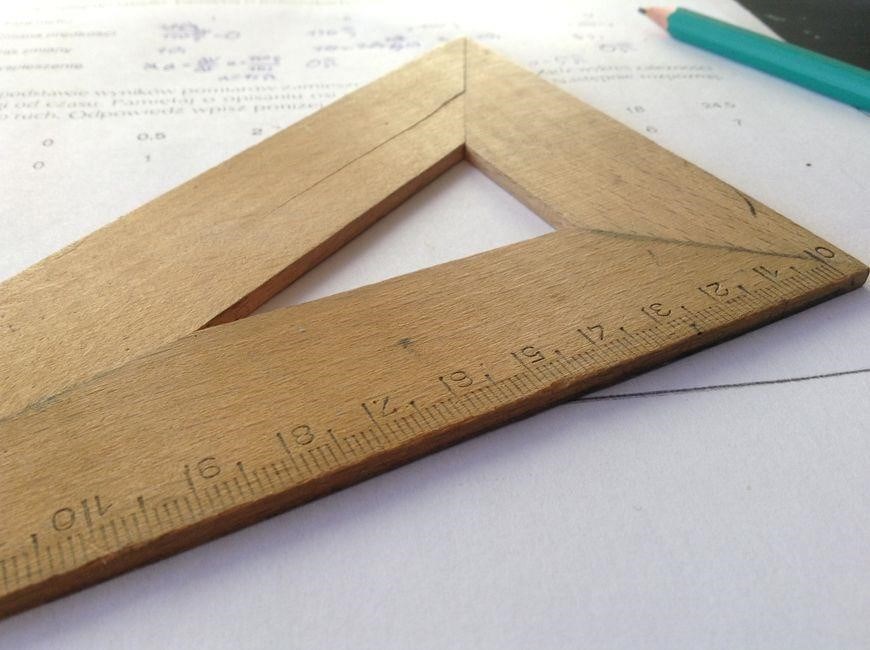
Construction and proof items in the Unit 4 Geometry Test Answer Key PDF focus on compass‑and‑straightedge tasks and formal CPCTC arguments; Each construction problem is numbered and accompanied by a concise description of the required diagram. The PDF includes a step‑by‑step solution that lists the sequence of compass and straightedge operations, such as drawing a perpendicular bisector, constructing an angle bisector, or replicating a segment length. For example, a problem asks students to “construct triangle with sides 5 cm, 12 cm 13 cm.” The key shows the sequence: mark a base of 12 cm, and then and draw circles of radii 5 cm and 13 cm The proof questions are grouped under a separate section and each proof is presented in a two‑column format: the left column lists the statement to be proved, the right column lists the logical steps and justifications. The key uses standard geometric notation (e.g., ∠ABC = ∠DEF, AB = CD) and references the relevant theorem (SSS, SAS, ASA, or CPCTC). The explanations are brief yet thorough, often including a short diagram and a textual justification such as “By CPCTC, corresponding angles are congruent.” The PDF also provides a “Proof Checklist” that students can use to verify their reasoning process and avoid common pitfalls like misapplying a theorem or overlooking a required angle equality The construction and proof section is designed to reinforce procedural fluency and logical rigor, ensuring that students can both build accurate geometric figures and articulate rigorous proofs in a standardized format.
Supplementary Study Resources
FlippedMath offers practice problems and lesson videos for Unit 4. Illustrative Mathematics provides free worksheets; Use the official answer key PDF for reference. Review CPCTC proofs, triangle congruence, and construction steps. Practice with online quizzes and flashcards for mastery. Use these tools !
Studying Strategy Tips
When reviewing the answer key, note any patterns in the way questions are structured; this will help you anticipate the type of reasoning required. Practice drawing each construction step on paper before attempting the final diagram, as visualizing the process reduces errors. Use mnemonic devices to remember the CPCTC steps: C for congruent, P for corresponding parts, C for congruent again, T for triangle, C for corresponding parts. Create a study schedule that allocates time for both multiple-choice review and construction practice, ensuring you revisit challenging concepts regularly. Use diagram
Common Mistakes
Students often misinterpret congruent triangles, assuming equal angles imply equal sides, which is not always true unless the triangle is equilateral. Another pitfall is neglecting to label all given information; missing a side length or angle measurement leads to an incomplete proof. Many learners overlook the importance of operation order in construction and complex problems, such as drawing a perpendicular bisector before a midpoint, which can produce an incorrect figure.
Additionally, some students rely too heavily on rote memorization of theorems without understanding the underlying logic, causing them to apply a theorem in an inappropriate context. Finally, when reviewing the answer key, it is common to skip the explanation sections, missing valuable insights into why a particular answer is correct or incorrect.
Students frequently overlook the significance of the triangle inequality, assuming that any three side lengths will form a valid triangle. They also often misapply the ASA and SAS congruence criteria, confusing the order of the given elements. Another common error is failing to verify the orientation of angles when using CPCTC, which can lead to reversed or mirrored triangles. Many learners also neglect to check the consistency of side ratios in similar triangles, resulting in incorrect proportional relationships. Finally, some students skip the step of drawing auxiliary lines, which is essential for constructing perpendiculars or bisectors accurately.
Remember to double-check each step!!